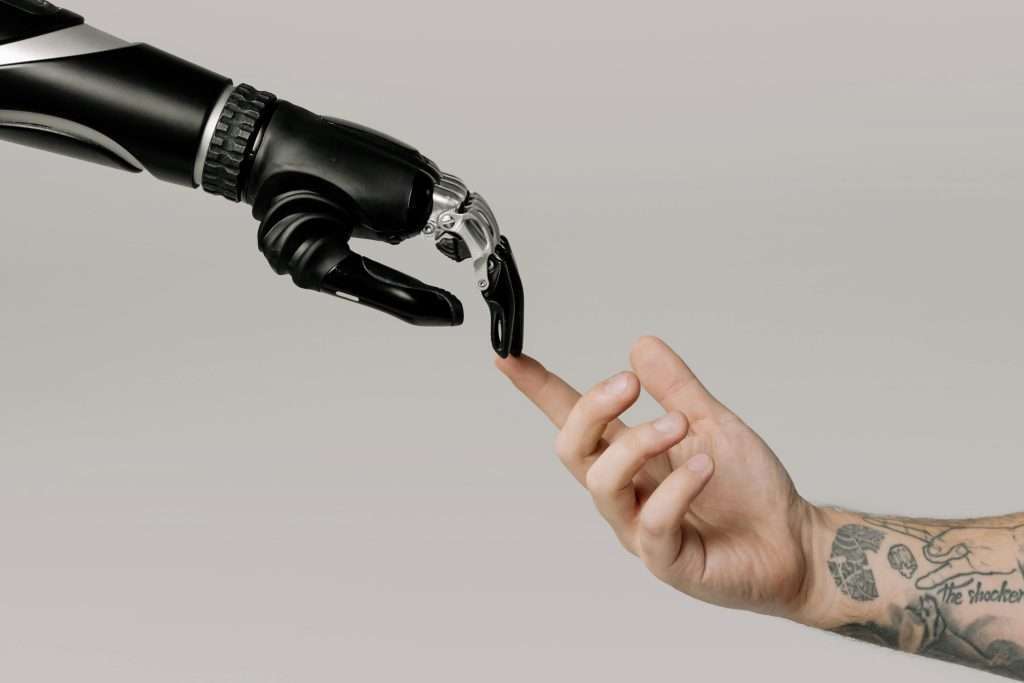
Is a writer who used AI to write large parts of their book even a writer?
AI writing tools have exploded in popularity, with some authors using them as assistants and others letting them do the heavy lifting. This raises an important ethical debate: is it fair or ethical for writers to use AI extensively in book creation?
It can feel very threatening, especially to writers and editors who make a living from putting a lot of heart, soul, and expertise into their writing. Suddenly the copywriting and book publishing markets are flooded with AI-written material. Some “authors” are spinning out whole novels using AI. Some of this is very obvious too as many of these wannabe writers don’t bother to edit, use thoughtful and self-created prompts, or do very much more than copy and paste. It’s obvious, fake, and off-putting.
Amazon and others are wrestling with this as they shut down many new books in what they are calling “saturated” topics. Sadly, because of the fear-based and reactive implementation of these shutdowns, even some original authors are getting caught in the crossfire. One can only hope that this is due to human error, and not something more ironic.
In any case, it’s clear that a calmer and more collected approach is needed if writers and publishers are to properly handle the rise of AI. But, to do that, we first need to understand its impact.
The Impact of AI on the Writing Industry
The Good:
- AI can help writers create better content faster.
- AI can increase accessibility for those who struggle with writing.
- When used wisely, AI can enhance creativity rather than diminish it.
The Bad:
- Mass AI book production could devalue human authorship.
- AI-generated content is leading to market oversaturation.
- Readers may lose trust if they feel deceived by books that lack real human input.
Because of the bad, the writing community is up in arms, and that’s understandable. No one wants to see their craft devalued, their income eroded, or their voice replaced by machine-generated words. However, fear and avoidance alone won’t stop AI from advancing. Writers who understand how AI works and adapt accordingly will be in a much stronger position than those who simply reject it outright.
For now, let’s just start with the broad concerns… how do we engage with a tool like this, especially when it is already here to stay?
The Case for Writers Using AI Ethically
It Boosts Productivity Without Replacing Creativity
Many professional writers use AI as an rather than a replacement. It can help with brainstorming, structuring ideas, or even generating rough drafts—but the final work is shaped, refined, and polished by human skill.
Accessibility & Overcoming Writing Blocks
For writers who struggle with dyslexia, disabilities, or mental blocks, AI can level the playing field, offering a way to express ideas faster and more effectively.
An Evolution, Not a Replacement
Just as word processors replaced typewriters and spellcheck corrected typos, AI can enhance writing, offering tonal corrections or alternative turns of phrase without making the writer obsolete. The key is to use AI as a tool, not as an automatic book factory.
Ethical AI Use Still Requires Human Craft
A smart writer might:
- Use AI for outlining, but write and flesh out the content themselves.
- Generate research summaries as a starting point, but then rewrite them in their own voice.
- Let AI suggest alternative phrasing, but decide which fits best.
When AI is used intelligently, the final book still carries the writer’s voice, ideas, and expertise.
The Case Against Over-Reliance on AI
Flooding the Market with Low-Quality Content
One of the biggest criticisms is that AI-generated books, churned out in bulk, are saturating platforms like Amazon. This devalues high-quality books written by skilled authors, making it harder for real talent to stand out amidst an ever-broadening sea of chaff.
Deceptive Authorship
If an “author” uploads an AI-written book with little or no editing, claiming it as their own, is it truly their work? Readers expect books to be a reflection of the author’s thoughts, style, and storytelling—not an untouched AI draft.
Loss of Human Voice & Emotional Depth
AI can mimic structure and style, but it lacks authentic emotion, nuance, and life experience. Books written purely by AI often feel hollow, formulaic, or generic—because they lack the unique idiosyncrasies and perspectives that make human writing compelling.
A Race to the Bottom
If books become cheap, mass-produced AI content, it could drive down prices and make it harder for creative, talented, and original human writers to earn a living. The more AI-generated books flood the market, the less incentive there is for publishers to invest in original storytelling.
Legal & Ethical Grey Areas
- AI models are trained on vast datasets, often without permission from the original authors. If AI is unknowingly mimicking another writer’s voice or style, where does originality begin and plagiarism end?
- Can an AI-written book even be copyrighted? Laws are still unclear on whether AI-generated content qualifies for copyright protection, since creativity is a legal requirement.
- Readers sometimes upload original manuscripts into writing, editing, and analytical AI tools without the author’s permission. This has become a real concern for many as a lot of the public don’t understand how AI tools actually work. As such, you have many writers with an overdeveloped fear of AI stealing their work. Meanwhile, on the other side of the scale, there people sharing to AI who don’t get why their actions are seen as contravening non-disclosure.
Is All AI Work Theft?
AI doesn’t “steal” from artists—at least, not any more than human creators already do—because all ideas, whether made by people or generated by AI, are built on pre-existing ones.
Just as artists study and are influenced by the work of those before them, AI learns patterns, styles, and techniques from vast datasets without storing or copying entire works. It doesn’t simply “retrieve and paste” but instead generates something new based on learned structures—much like how a writer absorbs storytelling conventions or a musician builds on past genres.
While ethical concerns about AI and copyright are still valid, and there are nuances to AI’s unique structure that must be accounted for (see Part 2 and Part 3) it’s important to recognize that creativity, whether human or machine-assisted, has always been an iterative process rather than something that emerges from a void.
AI-generated content isn’t inherently theft, but of course this doesn’t mean writers shouldn’t keep speaking out against plagiarism, overly-derivative works, or otherwise poor writing—whether it’s by an AI or not.
Smart Use vs. Lazy Automation: Where’s the Line?
Using AI Smartly (Ethical & Sustainable)
- AI helps generate ideas, summaries, or outlines, but the writer shapes the content.
- The final draft is heavily rewritten, fact-checked, and edited by the author.
- AI is used as a productivity tool, not as a shortcut to avoid real writing.
Using AI Lazily (Unethical & Unsustainable)
- Copy-pasting AI-generated content without serious editing or originality.
- Publishing AI-written books just to cash in on quantity over quality.
- Misleading readers into thinking a book was human-written when it wasn’t.
The difference is simple: AI should assist, not replace.
Writers Must Adapt, But Ethically
AI is not going away, but writers have a choice in how they use it. The best approach is to use AI as a tool for efficiency while keeping the creative process human-led. To retain value that’s worth the reader’s time, writing still requires skill, originality, and personal insight—not something that can be achieved by just using a machine to churn out words.
So, What Should Writers Do?
- Stay Informed—Keep up with copyright laws and AI advancements to protect your rights. Understand how AI actually works.
- Use AI Wisely—If using AI tools, ensure they are assisting, not replacing, your writing process.
- Speak Up—Support ethical AI practices and advocate for licensing models that fairly compensate writers.
Ultimately, the writers who combine AI efficiency with real human storytelling will thrive, while those who rely on AI to do all the work will struggle to build a lasting career.
What do you think? Should AI be used in writing and, if so, where should we draw the line? Drop your ideas below.
Follow me for the next two blogs in this series—Part 2: AI and Copyright and Part 3: What AI Actually Does With Your Words.
Need Help Publishing Your Work?
At Harvard Ink, we provide expert ghostwriting, editing, publishing support, and copyright guidance for writers navigating today’s fast-changing industry. Whether you need help registering your work, refining your manuscript, or launching your book, we’re here to help.
For all your publishing and book polishing needs, contact https://harvardink.com or info@harvardink.com.
Photos (in order) by:
- Cottonbro Studios, 2020, Pexels.
- Pheladi Shai, 2022, Pixabay.


